Explore how modern African motherhood shapes cultural identity and intersect as career women navigate the “double role” of professional leadership and family heritage.
Introduction
The steam from the New Year’s ugali or jollof rice has barely settled, and the echoes of the January 1st celebration are still humming in the hallways. In our last post, we met the Unsung Architect—the woman navigating the boardroom by day and the traditional kitchen by night, ensuring every guest was served while her own chair at the table sat empty.
But as the guests leave and the house grows quiet, we find that there is a third world this woman inhabits. It is a world that keeps her awake longer than any corporate deadline or celebratory feast.
It is the world of her children’s future.
Table of Contents
The Question That Changes Everything: how Modern African Motherhood shapes Cultural Identity
Imagine Sophia. She is a leader in her field, respected for her voice in meetings and her precision in the office. But one evening, as the New Year festivities wind down, her seven-year-old son looks up from his tablet and asks a question that feels like a sudden, cold gust of wind:
“Mom, why don’t I speak the language Grandma speaks?”
In that moment, the “bridge” Sophia has been building feels fragile. She realizes that her journey as a modern African woman isn’t just about her own professional success; it is about ensuring her children don’t lose the map to where they came from.
The Invisible Struggle: Why Language Matters
For many educated women, English, French, or Portuguese served as the ladder to the boardroom. But language is more than a tool; it is a vessel. When a grandmother tells a story in her native tongue, there are nuances—the rhythm of a proverb, the warmth of a joke—that simply do not translate.
Sophia, like many of us, faces the “Silent Tension” of motherhood in 2026:
- The “School vs. Home” Dilemma: The pressure for children to master “global” languages for academic success.
- Time Poverty: Finding the energy to teach a traditional dialect after a 10-hour workday.
- The Diaspora Gap: Raising children in cities where the mother tongue is rarely heard outside the home, that’s if both parents are from the same tribe with a shared dialect.
We worry that by being ‘too modern,’ we are failing as custodians of tradition. But identity is not a static thing we inherit. It is a fire we must learn to keep lit in our new environments.
Creating “Pockets of Heritage”
Sophia realized she couldn’t recreate the village in her city house, but she could be intentional. She moved from “cultural guilt” to a new strategy:
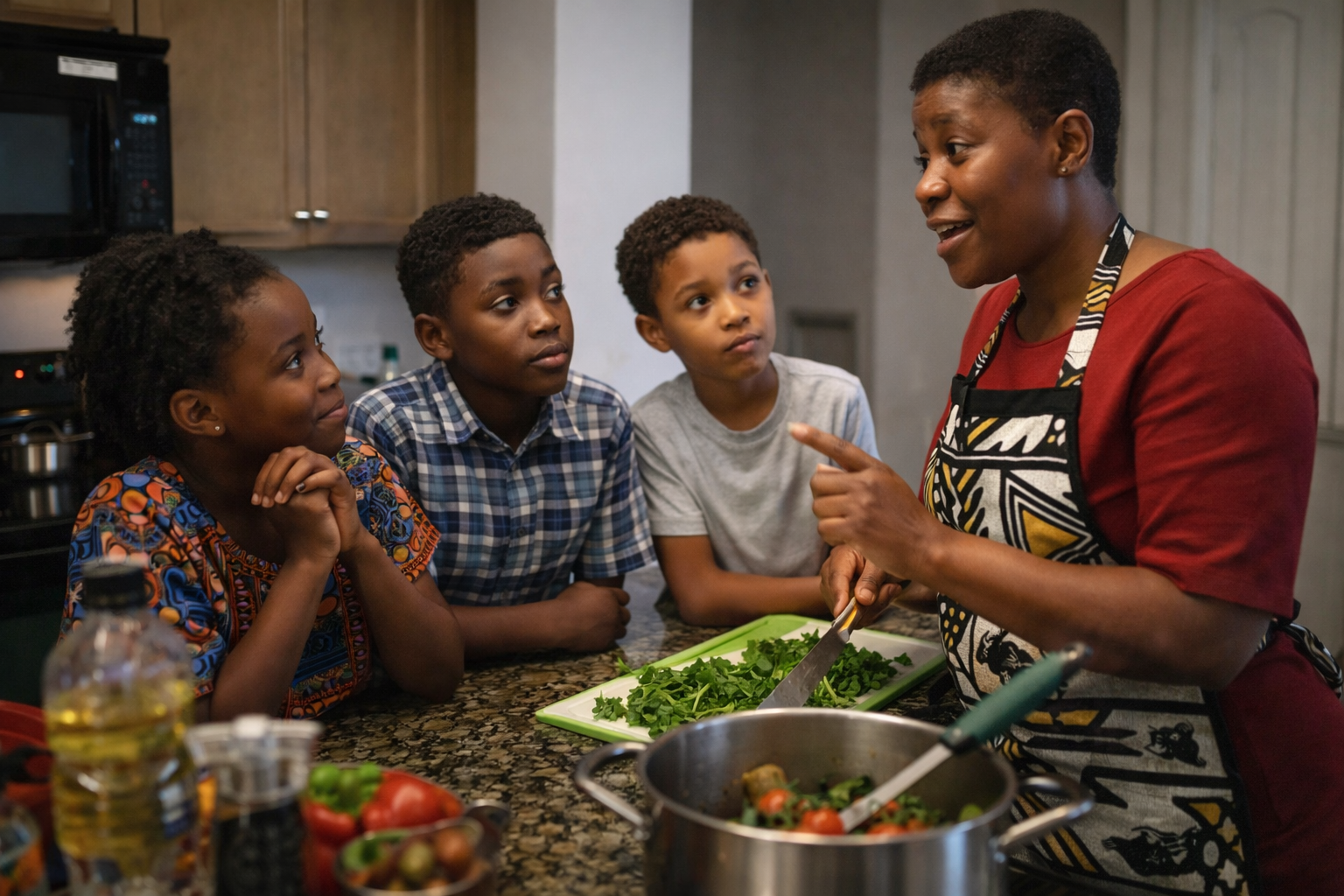
- The “Small Words” Method: She started with “heart words:” the names for food, greetings for elders, and terms of endearment. These are the anchors that help a child feel “at home” in their culture.
- Storytelling as Education: Instead of just standard bedtime stories, she began sharing the “lived experiences” of her own childhood: the themes of resilience and identity found in The Girl Who Left the Village.
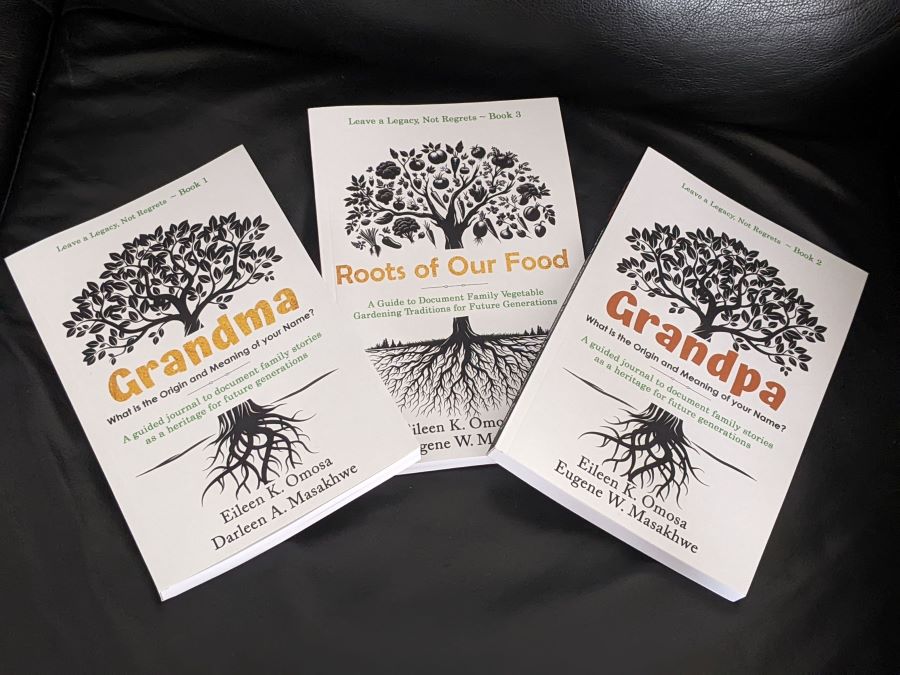
- Intentional Documentation: Sophia began using her heritage journals to write down the origin and meaning of names of all her family members, or proverbs in both her mother tongue and English. She wasn’t just writing for herself; she was creating a guidebook for her children.
Your Voice is the Greatest Legacy
The most powerful tool for the modern mother isn’t a textbook; it is her own voice. Your children need to know the story of how you navigated the world, how you fought for your career, and why you still hold onto the traditions of your mother.
When you document your journey, you give the next generation permission to be both: highly educated and deeply rooted.
A Journaling Prompt for the “Modern Cultural Custodian”
If you are feeling the pressure of being the bridge between two worlds, take ten minutes tonight to answer this:
- What is one proverb or “grandmother’s saying” in your mother tongue that guides your life today?
- How would you explain the meaning of that word to your child in a way that relates to their modern life?
By doing this, you are making the invisible visible. You are practicing the very heart of cultural heritage preservation.
Join the Legacy Circle
Whether you are a mother, a woman, a man, a student of sociology or gender studies, or a practitioner seeking to understand the “Double Role” of African women, your insights are needed here.
Your Next Step: Identify one cultural “gem”—a song, a word, or a family story, and share it with someone younger than you are, today. Don’t worry about perfection. Just let it be heard.
Explore the Leave a Legacy, Not Regrets Journaling Series designed for the busy, modern women who want to ensure her family’s “heart language” or mother tongue is never forgotten.
Because your story is the only inheritance that never fades.